

Skema gives us new opportunities to get more value from our BIM investments.
Nicholas Kramer, Associate and Director of Inspire Design, LPA, Inc.

A design gets approved. Then it gets remodeled from scratch.
Time consuming
Error prone
Inefficient

Solve design elements and reuse for every project after
Skema makes sure it works
Faster delivery
More time for design
Knowledge that compounds
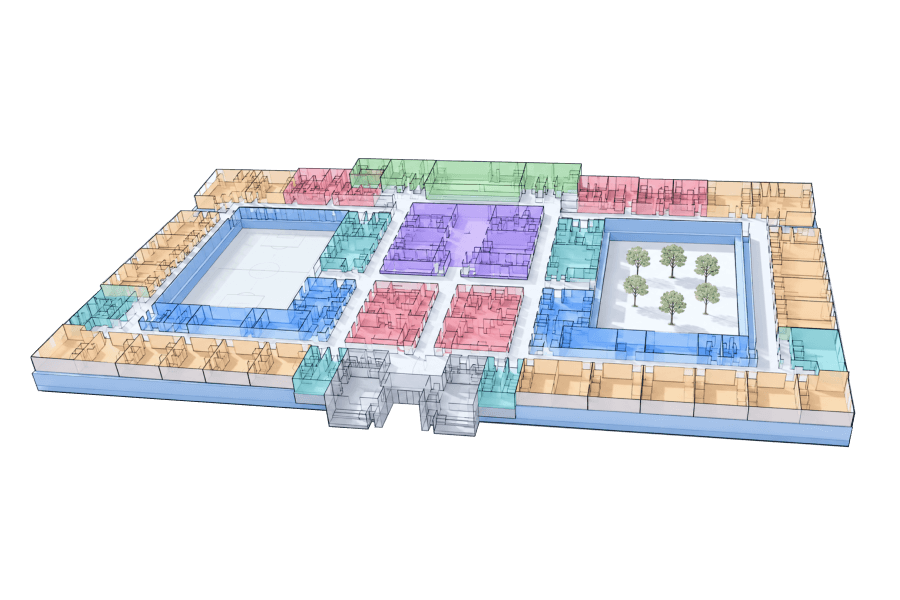
Skema Converts Schematic Designs into BIM Models in Minutes
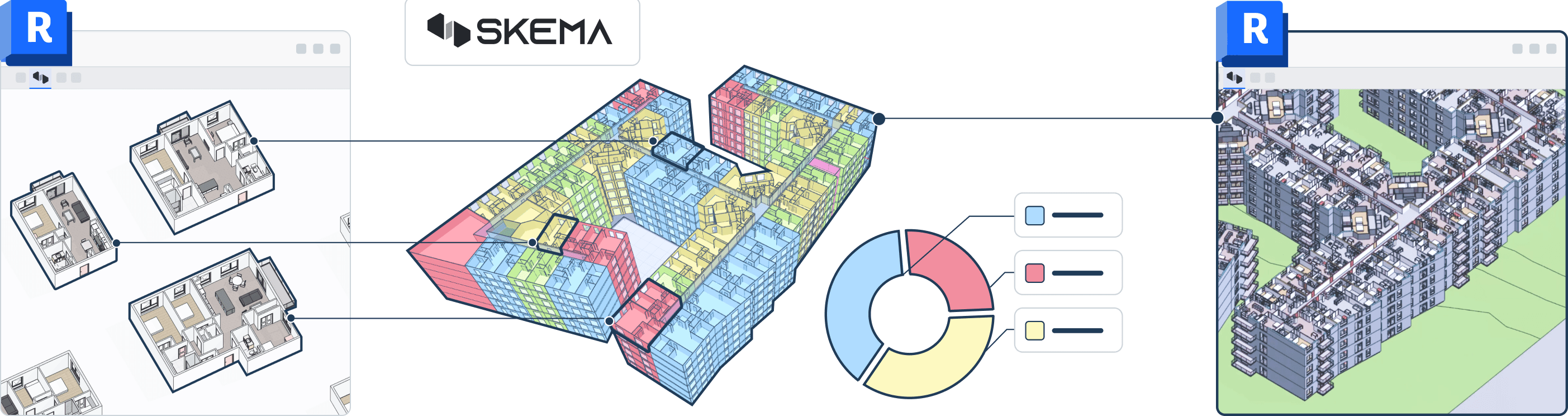
From massing to modeling to documentation, in one smooth workflow

Step 1: Capture design data

Step 2: Compose Coordinated Designs

Step 3: Validate Design Decisions

Step 4: Deliver BIM in Minutes






From retail to data centers, Skema turns schematic design into coordinated, engineering-aware BIM — while keeping your design knowledge working across every project
With Skema's robust integrations, designers can work seamlessly across their favorite software without relying on heavy file exchanges.
Skema’s API unlocks automation opportunities for suppliers, engineers, and owners.

For years I was skeptical that any tool could truly maintain coordination across shell and interiors simultaneously — without the rework that comes when you finally land in Revit. Skema's analytical model changed that. Project stays coordinated while both tracks are running in parallel.
Quick answers to common questions
Does Skema train AI on our design data?
Why does Skema work with native Revit instead of a format like IFC?
Revit models carry more than geometry. They carry the parametric relationships, families, and metadata that make a design buildable, and that intelligence is what makes a firm's past projects worth reusing in the first place. Converting to IFC and back can lose that intelligence along the way. Skema works with native Revit data directly, so the quality of your firm's original design work carries through.
How does Skema handle sustainability analysis?
Can LynAI integrate with our existing tools?